In February 2026, the UK government published its landmark PFAS Plan: Building a Safer Future Together — a comprehensive national strategy to address one of the most significant chemical challenges of our time.
For businesses that produce, handle or dispose of waste, the implications are significant and growing.
What Are PFAS?
PFAS (per- and poly-fluoroalkyl substances) are a group of thousands of man-made chemicals used across a wide range of industries and consumer products.
Their defining characteristic is extreme chemical stability — the carbon-fluorine bond is one of the strongest in chemistry — which makes them highly resistant to heat, water and oil.
This same property means they persist in the environment for decades or centuries without breaking down, earning them the name "forever chemicals."
Common uses include non-stick cookware coatings, water-repellent textiles, food packaging, firefighting foams, electronics manufacture, and medical devices.
Why Does This Matter for Waste Producers?
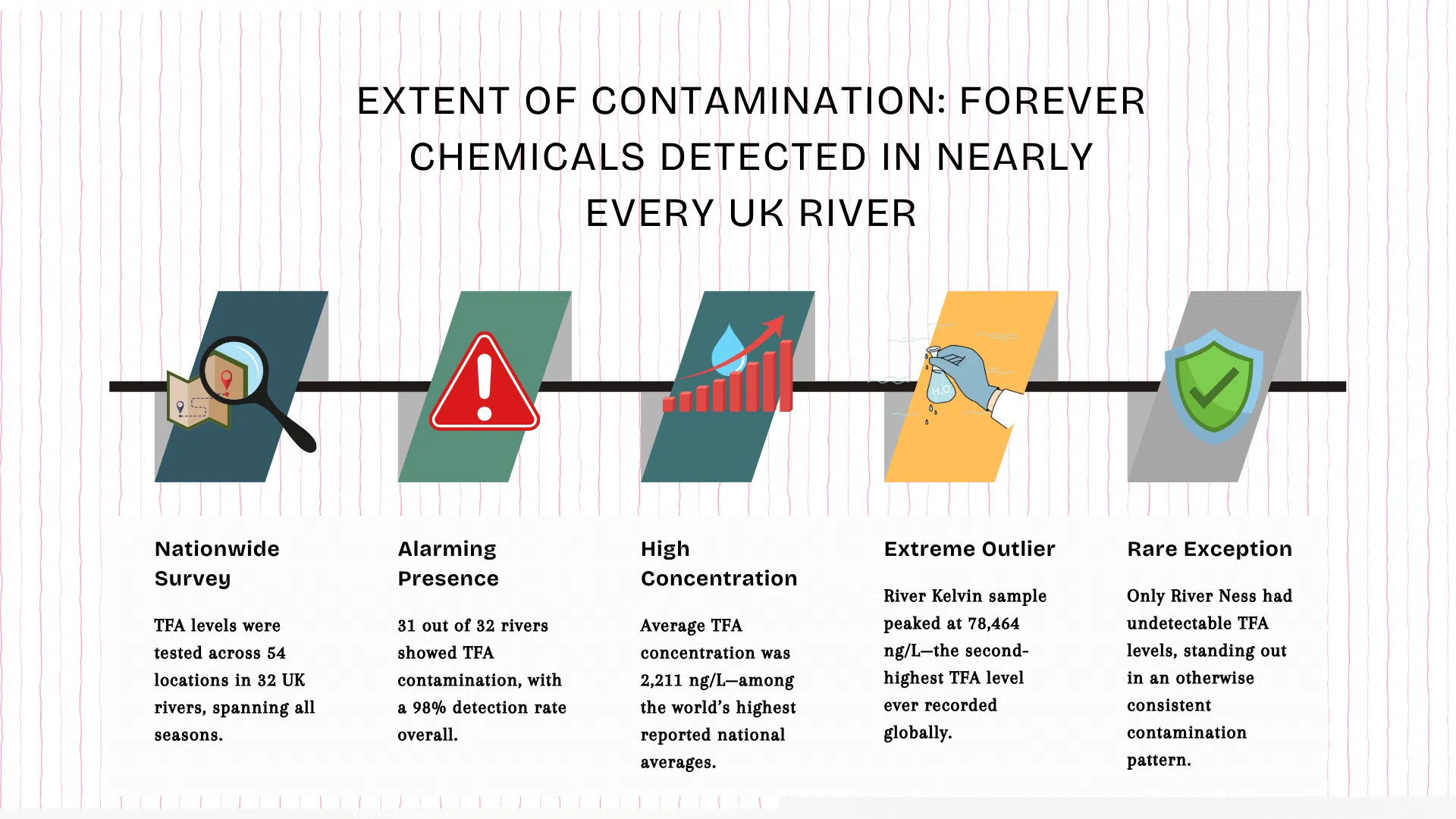
The government's PFAS Plan acknowledges that PFAS are found in approximately 80% of surface water samples and all fish samples tested across the UK.
Many of these PFAS enter the environment through waste — particularly from landfill leachate, industrial emissions, sewage sludge spread on agricultural land, and the disposal of PFAS-containing products.
If your business produces, processes or disposes of materials containing PFAS — including contaminated soils, firefighting foam residues, industrial solvents, textiles or electronics — you need to be aware of both current obligations and the regulatory changes coming in the next few years.
PFAS and POPs: Current Waste Obligations
Certain PFAS are already classified as Persistent Organic Pollutants (POPs) under the Stockholm Convention, which the UK has implemented through domestic legislation.
These include PFOS, PFOA and PFHxS — chemicals that are now prohibited and subject to strict waste management requirements.
Waste containing these substances must be disposed of in a way that destroys or irreversibly transforms the hazardous properties, typically through high-temperature incineration.
Standard landfill is not an acceptable route for POPs waste.
In May 2025, the Stockholm Convention agreed to add further PFAS — long-chain perfluorocarboxylic acids (LC-PFCAs) — to the global elimination list. The UK government is now implementing this domestically, with restrictions expected by the end of 2026.
PFAS in Firefighting Foams
PFAS-containing aqueous film-forming foams (AFFF) have been widely used in fire suppression systems across commercial and industrial sites.
The Health and Safety Executive is currently consulting on a potential UK REACH restriction on PFAS in firefighting foams, with a government decision expected in 2027.
Businesses holding AFFF stocks — including airports, fuel storage facilities, and industrial plants — should begin planning for disposal of legacy foam stocks through appropriately permitted routes.
PFAS in Waste: What's Changing
The PFAS Plan sets out a clear direction of travel for waste regulation:
- Landfill controls — The government is actively researching PFAS risks from landfill leachate and gas, with tighter controls on the disposal of PFAS-containing waste expected to follow.
- Environmental permits — The EA is developing cross-sector guidance and reviewing environmental permits at sites that handle PFAS. Industrial operators regulated under environmental permits will face a clearer duty to be transparent about PFAS use and emissions.
- Sewage sludge — A consultation is planned on reforming the regulation of sewage sludge spread to land, including PFAS monitoring requirements. Waste producers whose operations contribute to sewage streams should monitor this closely.
- Contaminated land — The EA's national PFAS risk screening programme is already being used to identify sites of concern. Businesses involved in land remediation or development of previously industrial land should assess PFAS exposure as part of site investigations.
Classifying PFAS Waste: EWC Codes
There is no single EWC code for "PFAS waste." Classification depends on the nature of the material:
- Contaminated soils may fall under 17 05 03* (soil and stones containing hazardous substances)
- Spent or contaminated firefighting foams may fall under 16 01 13* (brake fluids) or other relevant Chapter 16 codes depending on formulation
- Industrial solvents or process chemicals may fall under Chapter 07 or Chapter 14 codes depending on origin
- Where PFAS substances meet POP criteria, the relevant POP waste codes must be applied
Correct classification is essential. Misclassifying PFAS-containing waste as non-hazardous, or sending it to a facility not permitted to accept it, creates significant legal exposure under Duty of Care law.
What Should Businesses Do Now?
- Audit your waste streams — Identify whether any of your materials or processes involve PFAS, even indirectly (e.g., through use of PFAS-containing products or coatings).
- Review disposal routes — Ensure any PFAS-containing waste is going to a facility with the appropriate permit, particularly for POPs-listed PFAS.
- Monitor the regulatory pipeline — The PFAS Plan commits to over 25 specific actions over the next 2–3 years. The regulatory landscape for PFAS waste will change substantially by 2028.
- Engage with your waste contractor — Ask your contractor how they handle and classify PFAS-containing waste, and what disposal route they use.
Useful Links